
How love sometimes asks us not to change others—but to change ourselves.
Does love ask us to give up the person we expected so we can love the person who is actually here?
This is what I thought about after watching an episode of Ray Bradbury Theater titled “Tomorrow’s Child.” This is not one of the show’s highest-rated episodes, but to me, it is one of the most powerful.
I have a niece with special needs, and to me, this story feels like an allegory for children with special needs. That’s why the episode resonates so deeply with some people and less with others. Certain kinds of love become easier to recognize once you’ve seen them up close. But if you have children, I think the episode will still be relevant to you.
I’m going to give a summary that will include a spoiler, so just be aware. My summary will be short.
In “Tomorrow’s Child,” a couple uses experimental technology to ensure a perfect birth, but something goes wrong, and their baby appears to them as something alien and unrecognizable. While the mother struggles to love the child as it is, the father won’t accept it. In the end, they choose to join their child in its strangeness so they can be with them. They would rather be strange than be without their child.

I think about this kind of thing often.
Before my sister had a child with special needs, I had already seen something similar in my own family. I have a cousin whose daughter used a wheelchair, and for my cousin, her daughter became her whole identity. We say that happens to all parents, and it does. We become mothers and fathers. But when your child has special needs, that identity holds on tighter. That child is with you in everything. Every place you go. Every moment, good or bad. And when my sister had her child with special needs, I saw that same pattern again.
When Love Changes the Family
It doesn’t just shape the parent, it shapes the whole family. Siblings step in. The family adjusts. Love stretches. That experience is part of me, and it led me to write my first children’s book, Sally the Bold—a story about a young knight in a wheelchair.
And I’ll be honest… I thought that kind of love was universal. But after writing that book, I stepped more fully into that world, and regrettably, I learned something I didn’t expect.
It’s not always like that.
Some parents don’t show up. Some don’t come to their children’s events. Especially as the children grow older, the presence fades. There are loving families, absolutely. But it’s not as common as I thought. And that’s what makes “Tomorrow’s Child” so meaningful to me. It shows us something difficult: loving someone who is different from us doesn’t always come naturally. It can be a struggle. But it also shows us something else: that love can grow past that struggle because the parents make a choice.
They don’t change the child.
They change themselves.
And that’s the real message.
Even outside of special needs, every child is different. Every person is different. We don’t always understand why our children do the things they do, why they think differently, or why they see the world in ways we don’t. And this is why the story really is important and why it reaches us. Because even if our children are not “different” in a visible way, they are still complete individuals. They will experience the world in their own special way.
And love, at its core, is not about making them see the world the way we do, but learning to see the world as they do. We may not understand it, but we can accept it.
This Bradbury story takes this idea to an extreme. They would rather become strange than live without their child. But in our world, the change is quieter. It means stepping into someone else’s perspective, even when it feels unfamiliar.
The truth is, becoming a parent is already a kind of self-sacrifice. Not death, but the end of who we used to be as we become someone new.
Love is not proven by accepting the person we imagined or wanted. Love is tested when the person before us is different from what we expected. When that happens, real love asks us to change ourselves rather than try to change them.
So, in the end, the story asks something deeper:
Would we change ourselves for the people we love?
Would it be harder if they were completely different from us?
And that is the hardest question of all—
Will we accept people who feel strange to us?
Albert Jr.
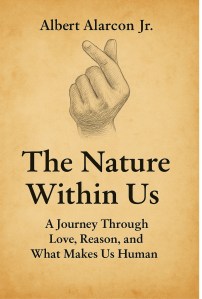
Author of The Nature Within Us
↩ Home
Leave a Reply