
What kind of person do we become when nobody is coming to save us?
There is an old science-fiction movie from 1957 called The Land Unknown. It has dinosaurs, giant plants, a lost world under Antarctica, and all the old adventure tropes that come with that kind of story. But there is one part of the movie that I think about a lot.
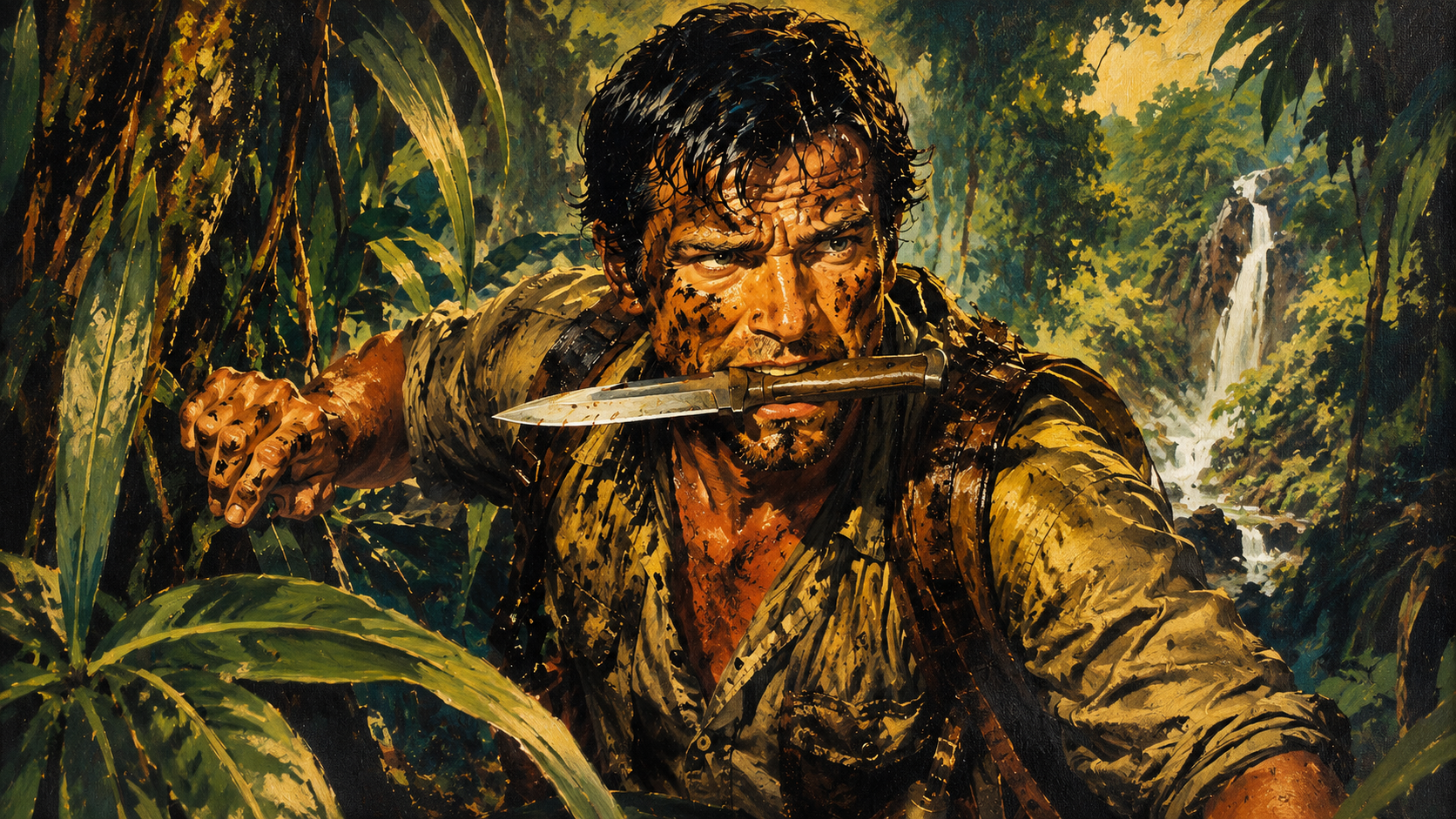
Spoiler warning: In the movie, a helicopter crashes into a hidden tropical crater beneath the Antarctic ice. The people on board are stranded. Among them is a woman, a reporter named Maggie. Before long, they discover they are not the first people to end up there. Another man has already been trapped in that place for years. Everyone else who came with him died, but he survived. He built a shelter. He learned how to live among the monsters. And then, when he sees Maggie, he tries to take her. Yep, he’s more than a bit crazy. But that is too easy.
I do not sympathize with what he does. But I understand the fear that might lead him there. He has no reason to believe anyone is coming to save him. No society is watching. No law is coming. No neighbor is going to knock on the door and ask what happened. He is alone in a world reduced to hunger, danger, loneliness, and survival. So, the question becomes uncomfortable: is he crazy, or has he surrendered to the oldest and ugliest part of himself?
That is where the movie becomes more than a dinosaur movie. It asks the same question that shows up in apocalypse stories, zombie stories, prison stories, and trapped-room stories like Cube or 28 Days Later. When the world falls apart, do people become kinder because they need each other, or do they become cruel because nobody can stop them?

I have written before that unkindness is unnatural, and I still believe that. Human beings are social creatures. We are not tigers wandering alone through the jungle. We survive through families, friendships, neighbors, trust, language, and care. We are built to live with one another. But there is another truth, too. When fear gets loud enough, some people start calling selfishness “survival.” They begin to see other people not as people, but as obstacles, resources, competition, or property.
That is what happens to the stranded man in The Land Unknown. Maggie is no longer a human being to him. She becomes something he thinks he can claim. The men with her are no longer frightened people stranded in the same dangerous place. They become rivals. Competition. Obstacles to remove. This is where understanding has to stop and honor has to begin. Not honor as pride or reputation, but as self-respect and decency.
Understanding a person’s fear is not the same as excusing what that fear makes them do. His loneliness may explain him, but it does not excuse him. His suffering may help us understand how he got there, but it does not give him ownership over another person. That may be the real moral danger in the movie. It is not only that he wants to survive. It is that survival turns into entitlement. He starts to believe that because he has suffered, he is owed something. He is owed the woman. He is owed control. He is owed the right to decide who gets to live in the world he has made for himself.
But no amount of suffering gives us ownership over another person.
The danger is not only that he wants Maggie. The danger is that he no longer sees her as someone with a life, a mind, a fear, and a will of her own. She becomes “the woman.” The men become “the competition.” The whole group becomes a threat to his private world. And that is why I do not think this character belongs only in old monster movies. He is not as far away from us as we would like to believe.
Objectification does not always mean turning someone into a sexual object. Sometimes it means turning someone into an obstacle, a customer, a target, a wallet, a problem, or competition. A reckless driver who cuts us off in traffic may not be thinking about whether we have children in the car. In that moment, we are not people to him. We are just something in the way. A scammer who calls and tricks someone out of their money is not thinking about that person’s family, fear, rent, medicine, or last paycheck. That person becomes a wallet. A target. A way to get what the scammer wants.
How far are those people from the man in the crater?
Of course, there is a difference. Cutting someone off in traffic is not the same as trying to kidnap a woman or kill the men she came with. But the moral movement is similar. First, we objectify the other person. Then we use them. Then we tell ourselves we had a reason. That is where cruelty often begins. Not with hatred, but with reduction. We make another person smaller in our mind until they are no longer fully real to us.
This is why compassion matters. Compassion is not only a feeling. It is a way of seeing the world. It reminds us that the other person is not just an obstacle in traffic, not just a voice on the phone, not just competition, not just a body, not just a problem. They are people. Human beings. Real people with fears, hopes, needs, lives of their own, and others who love them.
Most of us will never be stranded in a lost world under the Antarctic ice. We will never have to decide who we become when dinosaurs are outside the door, and rescue may never come. But we do face smaller versions of that question every day. When we are afraid, when we are angry, when we are desperate, when we think nobody is watching, do we still see the other person?
Fear gives us excuses. So does loneliness. So does desperation. The man who was stranded had every reason to become smaller, harder, and crueler. But that is where our honor is tested: when we have a good excuse to become less human, and we choose not to.
That may be the real test of civilization. Not whether we have laws. Not whether we have manners. Not whether we know the right words. The test is whether we can still recognize another person as a person when our own fear tells us not to.
Albert Jr.
Author of The Nature Within Us
Leave a Reply