
In a dark, smoky room, with a voice made for shadows:
Submitted for your discernment: a young woman, a lonely heart, and a decision too small to seem dangerous. Every door we open closes another. Every choice carries weight, even when we do not know we are carrying it.
There are moments in life when consequence waits quietly behind the door.
Tonight, that door opens in
-The Twilight Zone-
I recently watched a Twilight Zone episode called “The Cold Equations.” The story itself is not hard to understand, but what it has to say is much harder.
Spoiler alert.
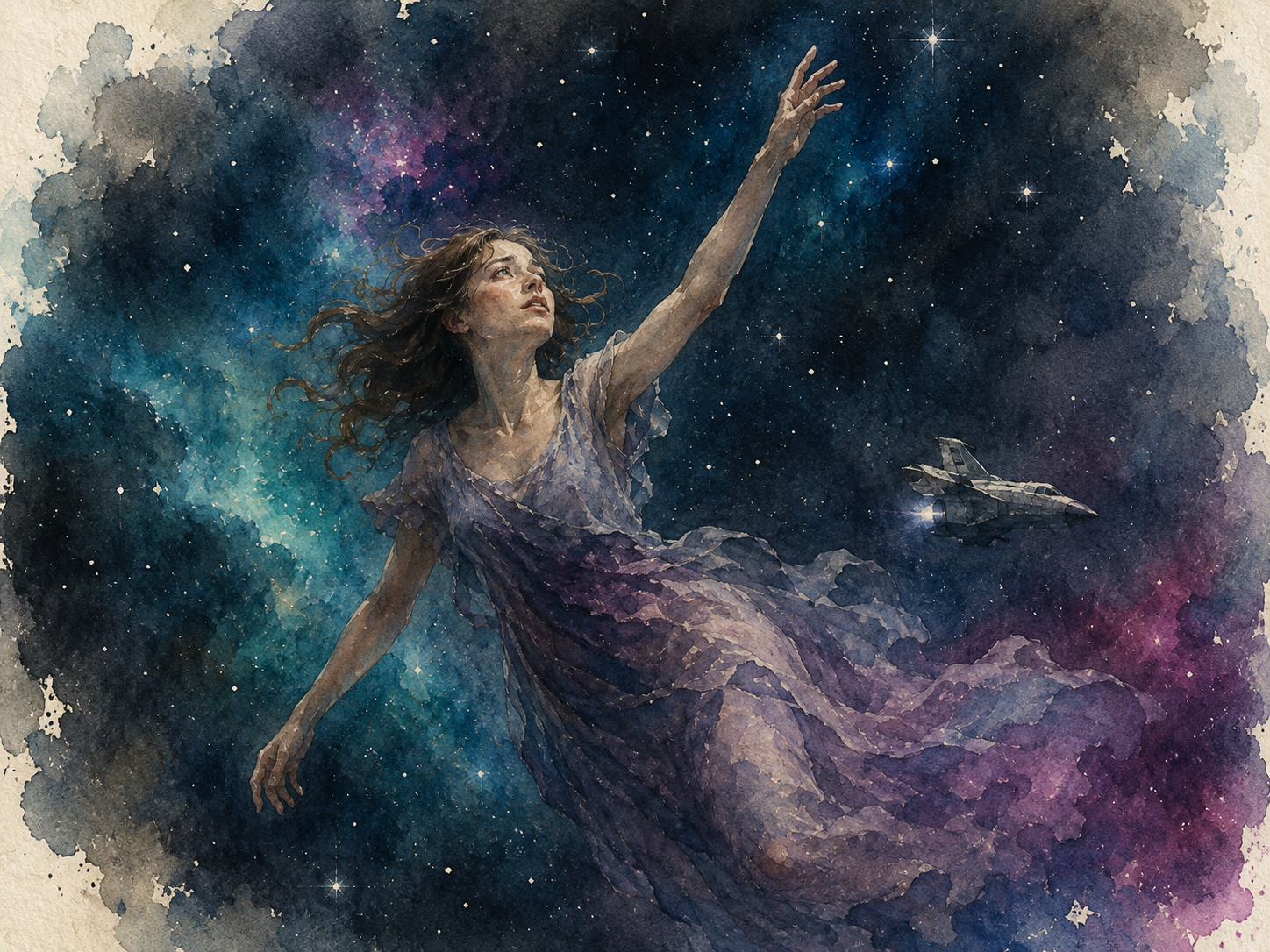
The story takes place on a spacecraft. A young woman named Marilyn stows away on an emergency dispatch ship because she wants to visit her brother, whom she has not seen in a long time. The problem is that the ship only has enough fuel for its exact mission. It is carrying medicine to colonists who will die without it. Her extra weight means the pilot cannot reach the destination unless she is removed from the ship.
That is why she “has to die.”
She cannot remain on the ship.
At first, the pilot seems cold. He acts indifferent. But right away, he tries to save her. He calls for help. He asks whether another ship can pick her up. He looks for any other answer. He tries to see if they can get rid of extra weight. There just is not a solution.
That is what makes the story cruel. It is not cruel because nobody cares. It is cruel because everybody cares, and caring does not change the equation. The pilot explains that the medicine has to reach the colonists. Not going there is not an option. He cannot die in her place because he is the pilot, and she cannot fly the ship. The story keeps closing every door until only one terrible answer remains.
She has to die.
That is what makes the story memorable. Marilyn is not a villain. She is young, lonely, and foolish in a way many people have been foolish. She wants to see someone she loves, and she does not understand what that choice will cost. But once the choice is made, everyone else is pulled into it. The pilot is pulled into it. The colonists are pulled into it. The people on the other end of the radio are pulled into it. Her brother is pulled into it. Nobody else made the choice, but everyone has to live with the consequences of it.
That is where the story became more than simple science fiction for me.
I know someone who has tried to kill himself more than once. I have also known people who did kill themselves. So when I watched Marilyn’s brother realize what had happened and why, that part became memorable too. He knows right away what her being a stowaway means. He knows where the problem lies. He knows she will have to die. And he feels responsible. If he had not been there, she would not have tried to reach him. If she had not tried to reach him, she would not have stowed away. If she had not stowed away, she would not have to die.
That is not fair, but grief is not always fair.
That is the part that reminds me of suicide around me. Not because suicide is the same as stowing away on a ship, and not because people who die by suicide are simply making a careless decision. I do not believe that. I think they are in more pain than they know how to carry. They are not trying to leave a wound behind. They are trying to escape one.
But the wound is still left behind, and it is a deep one.

Someone has to answer the phone. Someone has to find them. Someone has to wonder what they missed. Someone has to replay the last conversation. Someone has to ask whether they should have known, should have called, should have done more. (And I have done all these.) Even when the answer is no, even when the guilt is not fair, grief does not always care about fairness.
That is why Marilyn’s brother matters so much in the story. He did not put her on that ship. He did not tell her to stow away. He did not design the ship. He did not decide how much fuel it carried. He did not create the equation. But he is still pulled into it. He still feels responsible, not because he caused it, but because love has a way of making us answer for things we never chose.
That is what grief does. It pulls people into equations they did not create.
The pilot is pulled into it too. He did not ask Marilyn to board the ship. He did not want to kill her. He tries not to kill her. But he is the one sitting there with her. He is the one who must explain it. He is the one who must keep flying. He is the one who has to live with it after she is gone.
That is why the pilot seems cold and indifferent. People do not always act indifferent because they do not care. They act indifferent when the pain is too large, and they are trying to survive an unimaginable moment. They become practical because if they stop to feel everything, they will not be able to do what still has to be done.
The pilot looks cold because the equation is cold.
But he is not cold.
The people on the other end of the radio are not cold.
Her brother is not cold.
They are helpless, and helplessness can look a lot like indifference from the outside.
That is the cruelest part.
Love wants another answer. Love wants to say there has to be more fuel. There has to be another ship. There has to be something they can throw overboard. There has to be some way to save her. Love wants to argue with the equation.
But there is not.
Marilyn did not mean to hurt anyone. She wanted to see her brother. But her choice still put the pilot in an impossible position, put the colonists at risk, and left her brother carrying a guilt that does not belong to him.
When someone dies by suicide, people want to know who failed. Was it us? We look for what we missed, the sentence we should have heard differently, the thing we should have done. At times, there are answers. There are things someone should have seen. But there is also pain, confusion, and the terrible fact that a person reached a place where they could not see past their own suffering.
That does not make the wound smaller.
That is the hardest mercy to accept.
“The Cold Equations” is a science-fiction story, but what it understands is human. It understands that consequence is not the same as blame. It understands that people can be innocent and still be hurt. It understands that someone can make a choice out of loneliness, fear, or pain, and that choice can still enter the lives of people who never chose it. Our lives.
Marilyn is the one who has to die, but she is not the only one who is punished. The pilot survives. Her brother survives. The colonists may survive. But survival does not mean they walk away unharmed.
They are all trapped inside the consequence of one decision.
A decision they did not make or want.
Some choices end one life and enter many others.
Yours and mine.
Albert Jr.
Author of The Nature Within Us
Side Trails 🐇🥚🔥
Leave a Reply