
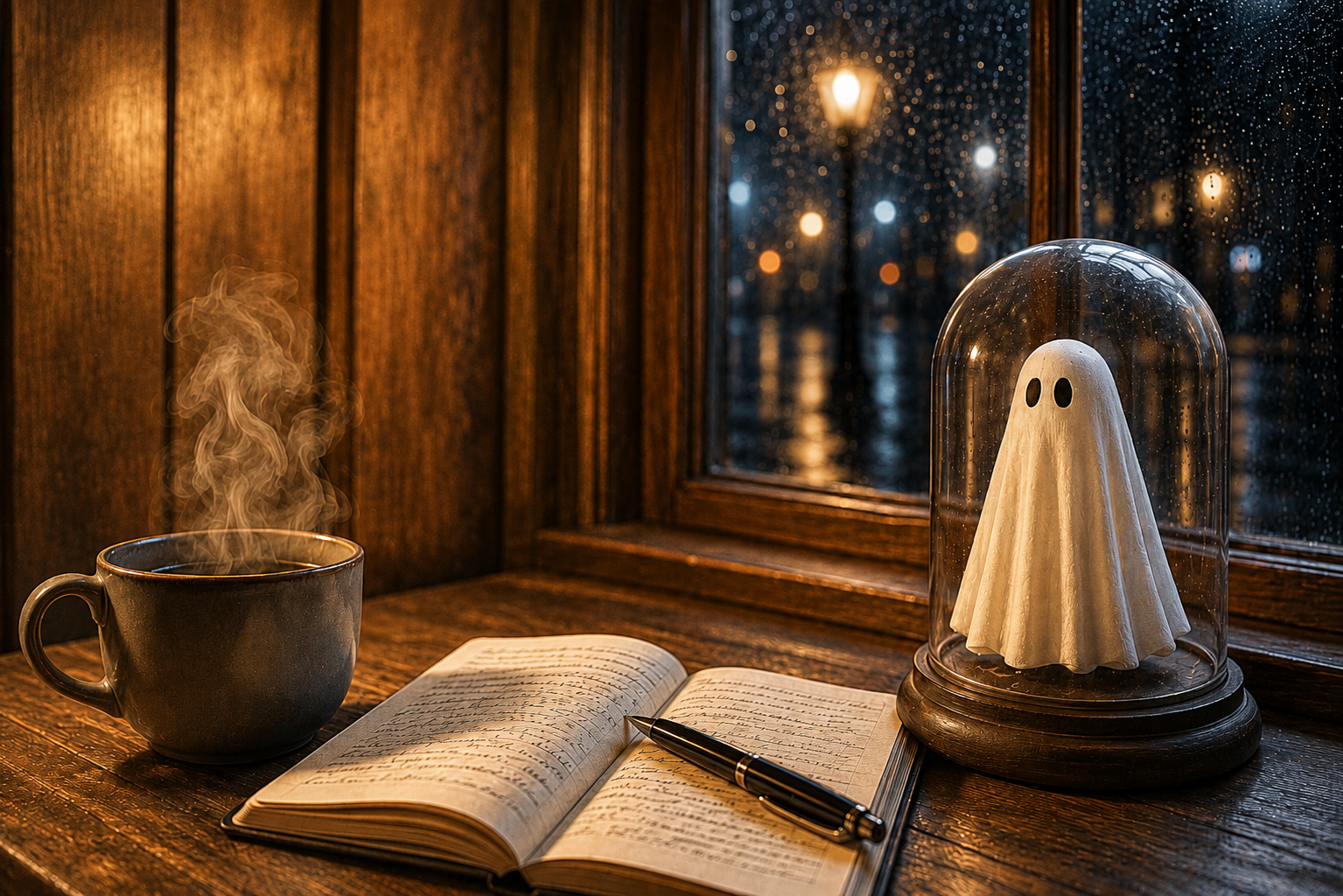
Are ghosts real? Do people care about truth? And should I care?
These are three questions I found myself asking when I started thinking about this essay. I don’t know if I’m really going to answer them, but they are where this story begins.
I am a skeptical free thinker, and if that’s already too much, you can really stop here. But if you’re interested, this is my story about ghosts.
I was watching Creature Features, the newer version that comes from Bodega Bay, and they had some ghost hunters on as guests. They had done ghost hunting in Hayward, California.
I happened to know a woman who worked with the historical society and museums in Hayward, and she knew these ghost hunters. They were pleasant people, and since I had seen them on Creature Features, it was fun to talk about.
At a later date, I was having a conversation with this woman about ghosts. She is very smart, probably much smarter than I am, and certainly more educated. She is also a kind woman, and one thing about talking with kind people is that they sometimes let you monologue much longer than you should.
And I’m sure I did.
I was telling her that ghosts aren’t real and giving her all the reasons I thought they weren’t real. There are many. I’m sure I was giving great arguments and great facts, and I’m also sure I asked plenty of questions along the way. She listened intently and kindly through all of it.
Then, after my long monologue, she said something very simple:
“I just want to believe in ghosts.”
That knocked me to the floor.
In that moment, the conversation stopped being about whether I could prove ghosts weren’t real. It became a question about me: What kind of person was I being?
I believe strongly in people’s freedom to think what they want, be who they want, and live the way they want. My basic belief is simple: you should be free to do what you want as long as you aren’t hurting somebody else.
And yet there I was, trying to convince this woman that something she enjoyed believing wasn’t true.
She wasn’t asking me to prove whether ghosts existed. She didn’t need the facts from me. Believing in ghosts was fun for her, just as believing in UFOs is fun for other people. It wasn’t hurting anyone. These ghost hunters were people she knew and liked, and this belief was connected to that part of her life.
That was when I realized I had crossed a boundary.
**Respecting someone’s boundaries also means knowing when their beliefs are none of our business. **Her belief in ghosts was part of her identity, not mine. I had been so concerned with whether the belief was true that I hadn’t stopped to ask whether I had any right to push my own beliefs into that part of her life. I believe people should have the freedom to think differently from me, yet there I was trying to convince her that she should see the world the way I did.
I wasn’t trying to hurt her. I thought I was simply giving her facts. But even facts can become an intrusion when we use them to push past another person’s boundaries.
She wasn’t hurting anyone. She wasn’t asking me to save her from a false belief. She had told me, in the clearest possible way, that this was something she wanted to believe.
And I had to rethink myself.
We all have a vision of who we are. I like to believe that I respect other people’s boundaries. And yet here I was, not doing that.
That required some introspection, and introspection can hurt. We like the picture we have of ourselves, and it is uncomfortable when our own behavior doesn’t match it.
I still believe truth is valuable. Facts matter. But there is also a difference between facts and the personal truths people choose to carry with them. We all believe things without having every fact to support them, and if those beliefs are not hurting anyone or infringing on somebody else’s life, that is not a problem.
We have to respect people’s truths—not their facts, but the things they choose to believe and the meaning they find in them.
I still care about what is true. That has not changed. But respecting another person’s freedom also means recognizing that not every belief they hold needs to become an argument I have to win.
We all have to find meaning for ourselves, to be true to ourselves, and to be allowed to be who we are.
The person I should have been trying to change that day wasn’t her. It was me.
Albert Jr.
Author of The Nature Within Us


Leave a Reply